The AI Stack
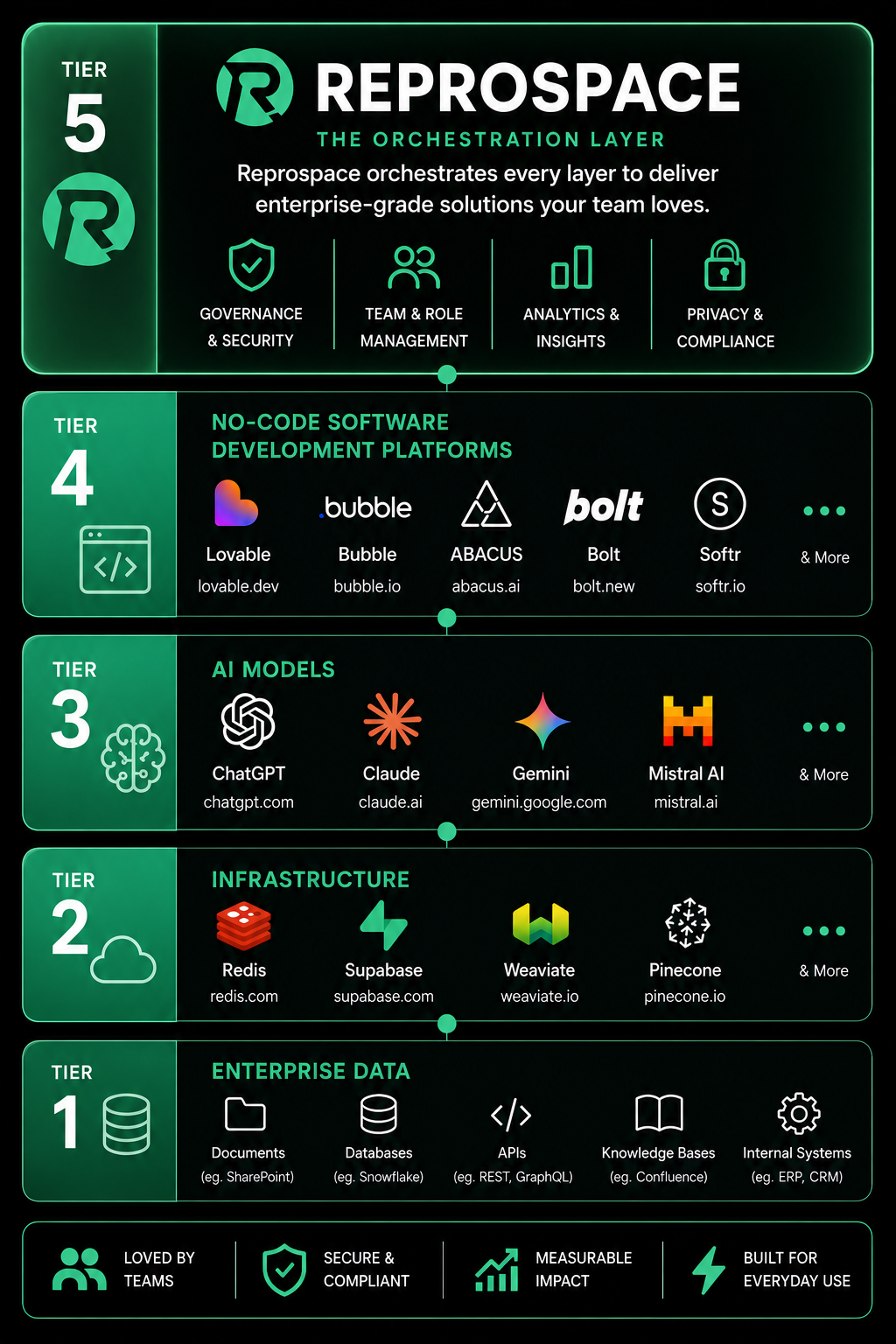
Over time, the technology stack has evolved from a few simple layers — hardware, operating systems, databases, and software — into a massive ecosystem of interconnected technologies. The rise of cloud computing, APIs, SaaS platforms, mobile apps, and now AI has continuously added new layers rather than replacing old ones. Today, businesses operate on complex stacks involving AI models, no-code development platforms, automation systems, vector databases, enterprise data systems, and infrastructure tools all working together behind the scenes. Tools like ChatGPT, Claude, Gemini, Lovable, and Abacus.AI are now part of a much larger AI stack that requires orchestration, governance, security, and strategic integration.
As the stack grows, orchestration becomes one of the most important roles in modern technology. The future is not about a single AI replacing everything, but about intelligently combining multiple systems into workflows that teams can trust and use daily. Even tools like Tycoon.us, which promotes the concept of an AI CEO, still require human guidance, strategic direction, and oversight. AI can optimize operations and automate decisions, but humans still define vision, priorities, ethics, and long-term goals. Companies like Reprospace represent this new orchestration layer — managing the growing ecosystem of AI, infrastructure, enterprise data, and human collaboration into enterprise-grade systems that are reliable, scalable, and aligned with real business outcomes.