AI for Scheduling, Dispatch, and Quotes: The Small Business Operations Upgrade
Introduction
For many small businesses, growth does not fail because of a lack of demand. It stalls because the day-to-day operations become too hard to manage. Phone calls pile up, schedules get messy, dispatch decisions take too long, and quotes sit in inboxes while competitors respond faster. When your team is juggling customer requests, technician availability, pricing, and route planning all at once, even a strong business can feel stretched thin.
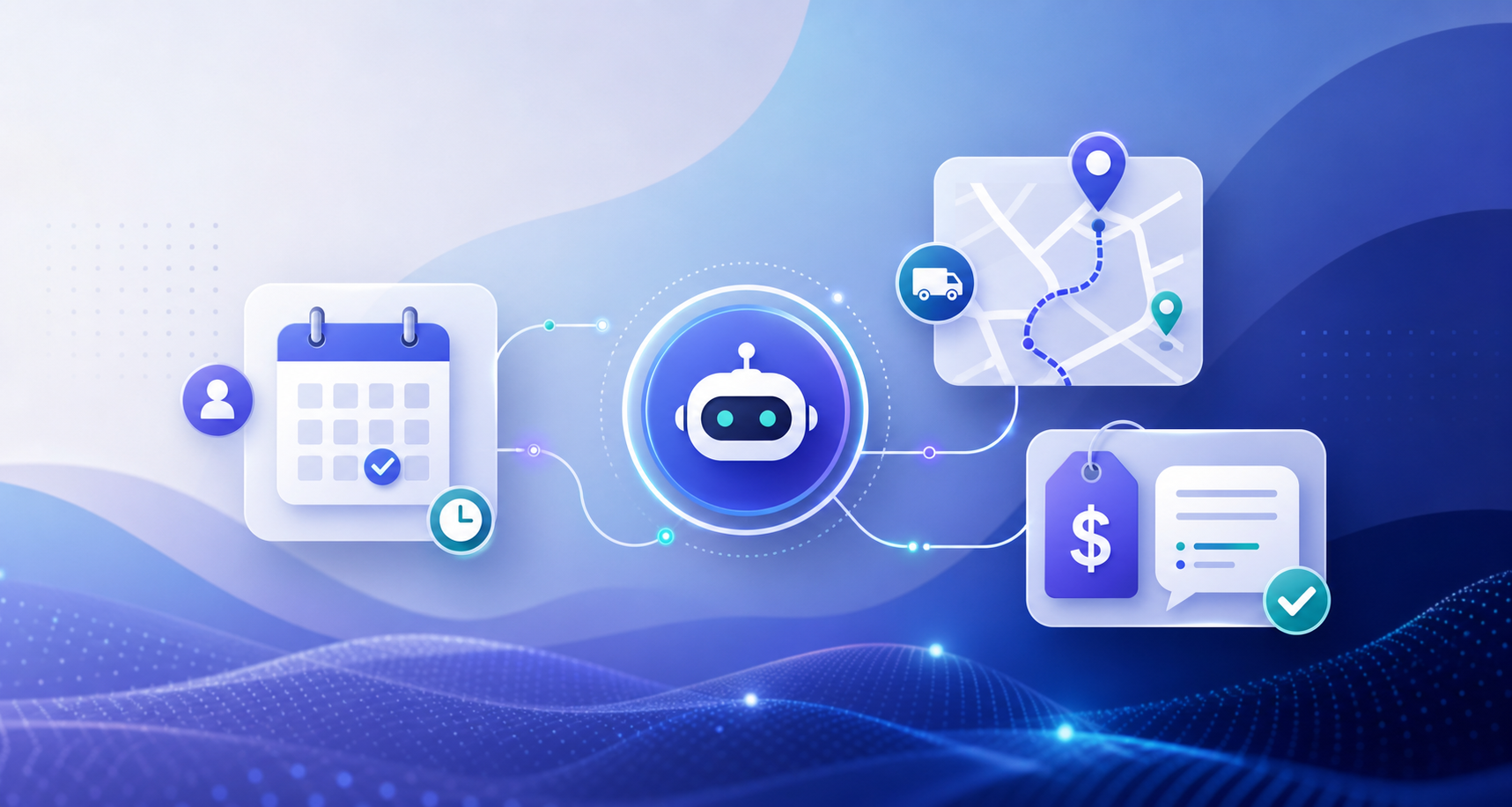
That is where AI for scheduling, dispatch, and quotes is changing the game. What used to require a coordinator, a dispatcher, and a sales assistant can now be streamlined with intelligent automation. Instead of manually fitting appointments into a calendar, matching the right person to the right job, or rebuilding estimates from scratch, small businesses can use AI to handle repetitive decisions and reduce operational friction.
The result is not just convenience. It is better customer experience, faster turnaround, fewer errors, and more jobs won. In this article, we will explore how AI improves scheduling, dispatch, and quote generation, why it matters for small businesses, and how to implement it in a practical way.
Why Small Business Operations Need an Upgrade
Small businesses often run on responsiveness. A client calls in the morning, a technician needs to be assigned by noon, and a quote has to go out before the end of the day. The problem is that traditional operations rely heavily on people making dozens of small decisions repeatedly. Over time, that creates bottlenecks.
Common operational pain points
- Missed appointments because schedules are managed manually
- Slow response times when dispatch depends on one person
- Inaccurate quotes due to inconsistent pricing or missing job details
- Underutilized staff because work is assigned without visibility into availability
- Stressful back-and-forth between office staff, field teams, and customers
These issues do more than create frustration. They directly affect revenue. A delayed quote can mean a lost sale. A poorly planned dispatch can lead to wasted travel time. A double-booked schedule can damage trust. In a competitive market, efficiency is not optional.
AI helps small businesses solve these problems by turning operational complexity into a system that can make smarter recommendations in real time.
What AI Brings to Scheduling
Scheduling is one of the easiest areas for AI to improve because it involves patterns, constraints, and optimization. AI can process more variables than a human can comfortably manage at once, including staff availability, appointment type, job duration, customer preferences, location, and priority level.
Smarter appointment booking
AI-powered scheduling tools can automatically suggest open time slots based on technician skills, calendar availability, and service urgency. Instead of manually scanning schedules, the system can identify the best fit in seconds.
For example, a plumbing company might receive a request for an emergency leak repair and a routine inspection. AI can prioritize the emergency, find the nearest qualified technician, and reserve the next available slot while still protecting the rest of the day’s schedule.
Reduced no-shows and last-minute chaos
AI can also improve appointment reliability through automated reminders, predictive confirmations, and scheduling buffers. If a job is likely to run long or a client often reschedules, the system can account for that behavior and adjust the plan.
This is especially useful for service businesses that depend on accurate timing, such as:
- HVAC companies
- Cleaning services
- Landscaping teams
- Pest control providers
- Repair and maintenance businesses
Better use of team capacity
One of the biggest benefits of AI scheduling is visibility. The system can look across the entire team, identify gaps, and help fill them without overloading individual staff members. That means fewer idle hours, fewer rushed jobs, and better utilization of labor.
In practical terms, this helps a small business owner answer questions like:
- Which technician has the right skills for this job?
- Can this appointment be moved to reduce drive time?
- Is there room to fit in an urgent request without disrupting the day?
AI makes these decisions faster and more consistent.
How AI Improves Dispatch
Dispatch is where scheduling becomes operational reality. It is not enough to book a job; the right person must be assigned, routed, and informed at the right time. When dispatch is manual, it often becomes reactive. AI turns it into a proactive process.
Matching the right worker to the right job
AI dispatch systems can evaluate job requirements and match them with employee profiles, certifications, availability, and location. Instead of assigning work based only on who is free, the system can consider who is best suited to complete the job efficiently.
For example, an electrical contractor may need a licensed technician for a commercial install, while a simpler residential maintenance task can go to a less specialized team member. AI helps reduce mismatches that cause delays or rework.
Route optimization and travel efficiency
For field service businesses, travel time is a major hidden cost. AI can optimize dispatch routes by grouping nearby jobs, avoiding unnecessary mileage, and adjusting assignments based on live traffic or cancellations.
This creates several benefits:
- Lower fuel costs
- More jobs completed per day
- Less time spent driving
- Faster arrival times for customers
If a cancellation opens a gap in the middle of the day, AI can recommend the nearest available job to fill the slot. That kind of flexibility can protect revenue and keep crews productive.
Real-time adjustments
Manual dispatch systems struggle when things change. AI is much better at responding to live updates such as:
- A technician finishes early
- A customer requests a time change
- A high-priority job comes in unexpectedly
- Weather or traffic affects travel
Instead of calling around to reshuffle the day, an AI-enabled system can recalculate assignments and suggest the best next move. That reduces operational stress and keeps service delivery on track.
AI for Quotes: Faster Estimates, Better Close Rates
Quotes are often where a small business wins or loses a customer. If a prospect has to wait too long, they may go with the first company that responds. If the estimate is inconsistent, unclear, or obviously guessed, trust can break down quickly.
AI quote automation helps businesses create faster, more accurate, and more consistent estimates.
Turning job details into instant estimates
AI can use service type, job history, labor rates, materials, urgency, and location to generate preliminary quotes in minutes. This is especially valuable when a business handles repeatable work with predictable pricing.
For example, a painting company can use AI to estimate based on room count, square footage, prep requirements, and finish type. A cleaning service can use visit frequency, property size, and special add-ons. A repair business can build pricing models from past jobs.
Standardizing pricing logic
One of the biggest challenges in quoting is inconsistency. Two employees may quote the same type of job differently, leading to margin problems and customer confusion. AI helps standardize the process so that estimates follow a clear pricing structure.
That does not mean every quote must be identical. It means your business can build rules around:
- Base labor costs
- Material markups
- Travel fees
- Emergency or after-hours rates
- Discounts and promotions
This creates more predictable margins and easier training for new team members.
Quoting faster without sacrificing quality
Speed matters, but accuracy matters more. AI helps businesses deliver quotes quickly while still incorporating the details needed for a professional estimate. In many cases, AI can prepare a draft quote that a manager reviews before sending.
This hybrid model works well because it combines automation with human judgment. You get the speed of AI and the quality control of an experienced team member.
A Practical Example: How It Works in a Small Service Business
Imagine a small HVAC company with five technicians and one office manager. A customer submits a request online for air conditioning repair.
Here is how an AI-powered workflow might look:
- The request is captured automatically through a web form or chat assistant.
- AI identifies the service type, urgency, and location.
- The scheduling system checks technician availability and assigns the best-fit person.
- Dispatch routes the technician based on proximity and existing appointments.
- A quote is generated using past repair data, part costs, and labor rates.
- The customer receives confirmation, an ETA, and a digital estimate.
- If the job changes, the system updates the schedule and quote recommendations in real time.
Instead of several manual steps, the business now has one connected process. The customer gets a faster response, and the office team spends less time coordinating basics.
How to Introduce AI Without Disrupting Your Business
Many small business owners are interested in AI but worry about complexity. The good news is that you do not need to automate everything at once. A phased approach works best.
Start with one high-impact workflow
Choose the area causing the most pain. For some businesses, that is scheduling. For others, it is quote generation or dispatch routing. Start where the return on time saved will be easiest to measure.
Define the rules behind the workflow
AI works best when you teach it the logic your business already uses. That may include:
- Operating hours
- Priority levels
- Service regions
- Qualification requirements
- Pricing rules
- Approval thresholds
The clearer your rules, the better the system can make helpful recommendations.
Keep human oversight in the loop
AI should support your team, not replace judgment where it matters. Review automated quotes before sending them in the early stages. Confirm dispatch decisions when jobs are complex. Use AI to reduce admin work, not remove accountability.
Measure the results
Track metrics before and after implementation, such as:
- Time to schedule an appointment
- Time to send a quote
- Number of missed jobs or double bookings
- Technician utilization
- Quote-to-win rate
- Customer response time
These metrics help you prove ROI and identify where to improve next.
Choosing the Right AI Operations Tools
Not all AI tools are built for small business operations. Some are generic automation platforms, while others are purpose-built for service workflows. The best solution should connect scheduling, dispatch, and quoting rather than treating them as separate silos.
Features to look for
- Calendar and availability automation
- Job assignment logic based on skills and location
- Quote generation from service data and pricing rules
- Integration with CRM, accounting, and communication tools
- Mobile-friendly access for field teams
- Approval workflows for exceptions and custom jobs
- Reporting dashboards for performance tracking
When evaluating a platform, ask whether it can adapt to your business processes or whether you would need to change your operations to fit the software. The right AI system should make work easier, not force your team into rigid workflows.
The Business Impact of Getting It Right
When small businesses upgrade operations with AI, the effects compound quickly. Faster scheduling improves customer satisfaction. Smarter dispatch improves productivity. Better quoting improves conversion rates. Together, these changes create a more resilient business.
The benefits often show up in areas that matter most:
- More jobs completed with the same team
- Less administrative overhead
- Faster sales response times
- Higher win rates on estimates
- Better customer communication
- Stronger margins through reduced waste
In other words, AI does not just help you do the same work faster. It helps you operate in a way that is more scalable and more profitable.
Conclusion: A Smarter Way to Run the Business
AI for scheduling, dispatch, and quotes is not a future trend reserved for large enterprises. It is a practical upgrade that small businesses can use right now to save time, improve customer service, and grow more efficiently.
If your team is still relying on manual calendars, spreadsheet-based dispatching, and time-consuming estimates, you may already be feeling the cost in missed opportunities and operational strain. The good news is that modern AI tools can automate the repetitive work while keeping your team in control of the customer experience.
If you are ready to modernize your operations, Reprospace can help. Explore how Reprospace builds AI-powered enterprise solutions, publishing management systems, and no-code platforms at reprospace.com, and start turning scheduling, dispatch, and quotes into a competitive advantage.