How AI Orchestration Is Reshaping Enterprise Operations
Introduction
Enterprise operations are under growing pressure to do more with less. Teams are expected to move faster, reduce manual work, improve service quality, and make smarter decisions in real time. At the same time, companies are adopting a growing number of AI tools: copilots for employees, predictive models for forecasting, document intelligence for processing, and agentic systems that can take action across systems.
The challenge is no longer whether AI can help. The challenge is how to connect it all in a way that is secure, scalable, and useful across the enterprise. That is where AI orchestration comes in.
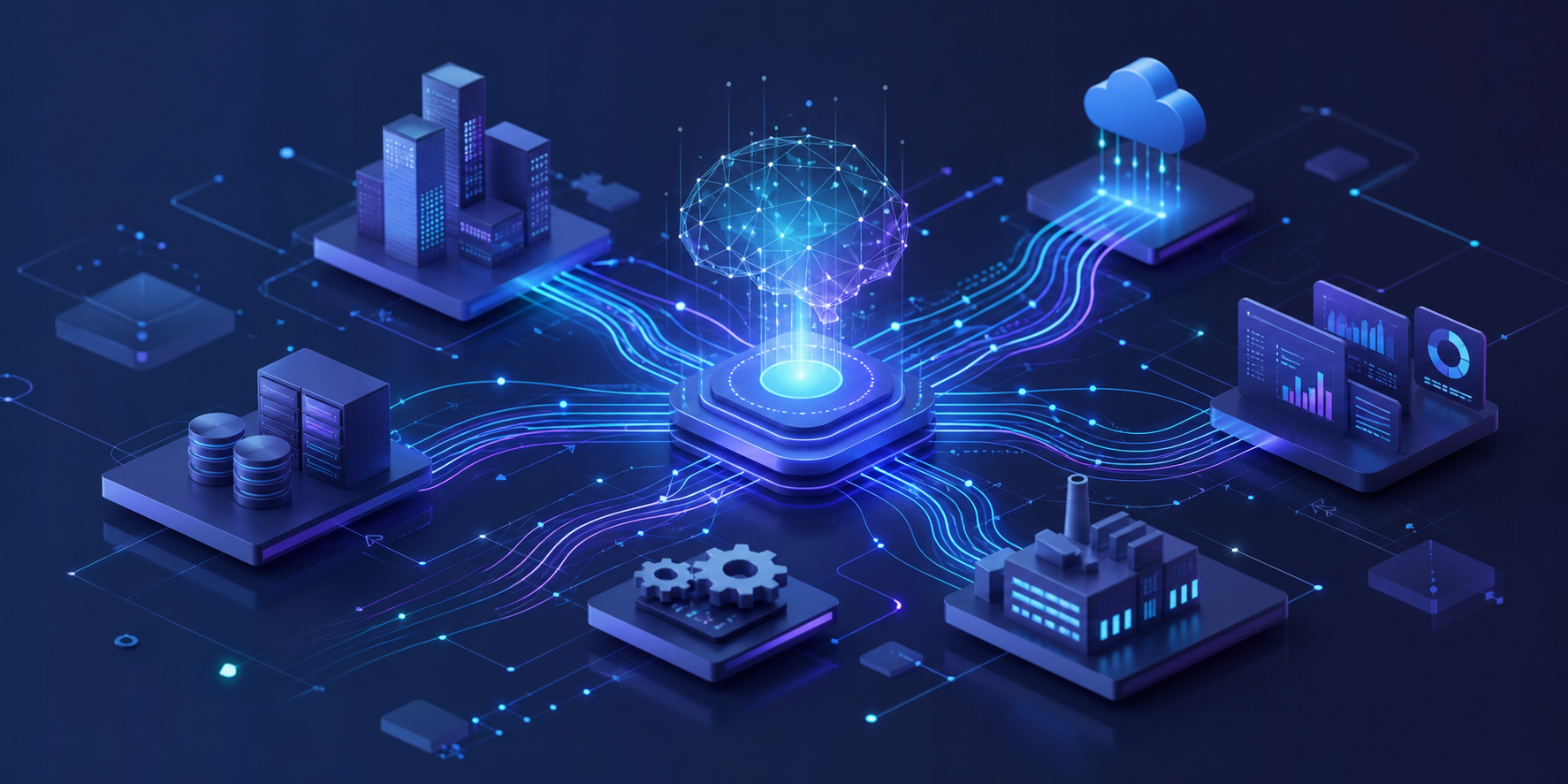
AI orchestration is reshaping enterprise operations by coordinating data, models, workflows, and business rules across systems. Instead of using isolated AI tools for isolated tasks, organizations can create connected, automated processes that reduce friction and improve outcomes. In practice, this means faster approvals, better customer service, more accurate forecasting, and more resilient operations.
In this article, we will explore what AI orchestration is, why it matters, and how enterprises can use it to modernize operations without losing control.
What Is AI Orchestration?
AI orchestration is the coordinated management of multiple AI models, automation tools, data sources, and human approvals within a single operational flow. It ensures that each AI component performs the right task at the right time, based on business logic, context, and system conditions.
Think of it as the operational layer that connects intelligence with execution. A standalone model might classify a support request, but orchestration determines what happens next: route it to the right team, pull customer history, generate a draft response, escalate based on sentiment, or trigger a workflow in a CRM.
How It Differs from Simple Automation
Traditional automation follows predefined if-then rules. AI orchestration is more dynamic. It can handle unstructured inputs, evaluate conditions using machine learning, and incorporate multiple AI services into one workflow.
For example:
- A standard automation might send every invoice to the same approval queue.
- An AI-orchestrated workflow can read the invoice, detect anomalies, compare it with historical spending, flag risk, and send only high-risk cases for manual review.
This makes operations both more efficient and more adaptive.
The Core Components of AI Orchestration
Most enterprise AI orchestration systems include:
- Data connectors that pull from ERP, CRM, HR, and content systems
- AI models or agents that analyze, predict, summarize, or recommend actions
- Workflow engines that define sequencing, approvals, and escalation paths
- Policy and governance controls that enforce compliance and access rules
- Monitoring and analytics to measure performance and reliability
Together, these components help organizations turn AI from a point solution into an operational capability.
Why AI Orchestration Matters for Enterprise Operations
Many enterprises have already invested in AI, but the benefits often remain fragmented. One team may use AI for customer support, another for procurement, and another for finance forecasting. Without orchestration, these efforts stay siloed and difficult to scale.
AI orchestration matters because it solves the integration problem. It helps enterprises move from isolated pilots to connected, end-to-end transformation.
1. It Reduces Operational Friction
Operations often break down at handoffs. A request enters one system, gets copied to another, waits for review, and is manually re-entered into a third platform. These gaps create delays, errors, and frustration.
AI orchestration reduces friction by moving information and actions through the workflow automatically. It can capture data from emails, forms, documents, or chat interfaces and route it instantly to the right process.
2. It Improves Decision-Making
Enterprise operations depend on timely decisions. AI orchestration can combine predictive analytics, generative AI, and business rules to support faster and more accurate choices.
For example, in procurement, AI can analyze supplier risk, contract terms, and past performance before recommending whether to approve a new vendor. In operations planning, it can identify demand shifts and trigger adjustments before bottlenecks occur.
3. It Makes AI Usable Across Departments
When AI is orchestrated, it becomes accessible across business functions rather than locked inside technical teams. Finance, operations, HR, legal, and customer service can all benefit from AI-powered workflows that are tailored to their specific needs.
This cross-functional value is essential for enterprise adoption. Leaders are far more likely to invest in AI when it improves multiple parts of the organization, not just one use case.
Key Enterprise Use Cases for AI Orchestration
AI orchestration is already changing how organizations work. The most effective use cases are those that combine repetitive tasks, structured decision points, and multiple systems.
Customer Support and Service Operations
AI orchestration can transform service operations by triaging tickets, summarizing conversations, suggesting responses, and routing issues based on urgency or customer value.
A practical example: a support email arrives with a billing complaint. The orchestration layer can identify the issue, retrieve the customer’s account details, detect whether the issue is recurring, draft a response, and escalate to a human agent if the sentiment score is negative or the account is high priority.
This reduces response times and improves consistency without removing the human touch.
Finance and Procurement
In finance, AI orchestration can support invoice processing, spend analysis, fraud detection, and vendor approval workflows. In procurement, it can monitor supplier performance, validate contracts, and flag anomalies in purchasing patterns.
Example: when a purchase request exceeds a threshold, the system can automatically check budget availability, compare the request against policy, pull contract terms, and route the request to the appropriate manager with a recommendation.
HR and Employee Operations
HR teams can use AI orchestration to streamline onboarding, answer employee questions, manage policy workflows, and support talent operations.
For instance, when a new employee joins, the system can trigger account creation, send onboarding documents, schedule training, notify facilities, and assign a mentor. This creates a smoother employee experience and frees HR teams to focus on higher-value work.
Content and Publishing Workflows
For publishing and content-heavy organizations, AI orchestration can coordinate research, drafting, review, compliance checks, metadata generation, and distribution.
A publishing workflow might use AI to summarize source material, generate a draft outline, route it to an editor, verify brand and compliance requirements, and push the final asset into a content management system. This speeds production while preserving quality control.
IT and Internal Operations
IT teams can use orchestration for incident response, access management, change approvals, and knowledge base support. When a system issue is detected, AI can classify the incident, gather relevant logs, suggest remediation, and notify the right responders.
The result is faster resolution and more consistent operational performance.
What Makes AI Orchestration Successful?
Implementing AI orchestration is not just about adding models to workflows. It requires thoughtful design, governance, and alignment with business goals.
Start with High-Impact Workflows
The best place to begin is with processes that are repetitive, data-rich, and painful to manage manually. These are usually the workflows where orchestration can produce quick wins.
Good candidates include:
- Case triage
- Document processing
- Approval routing
- Employee onboarding
- Invoice validation
- Customer support escalation
Starting with one workflow makes it easier to prove value and refine the orchestration model.
Define Human-in-the-Loop Decision Points
Not every decision should be fully automated. In many enterprise contexts, human oversight is essential for quality, compliance, and trust.
A strong orchestration strategy defines where AI can act autonomously and where human review is required. For example, routine cases may be auto-approved, while exceptions are escalated. This approach balances speed with control.
Standardize Data and Integrations
AI orchestration depends on reliable access to systems and data. If the underlying information is fragmented or inconsistent, the workflow will be brittle.
Enterprises should invest in integration layers, APIs, and data governance so orchestration engines can work across systems without constant manual intervention.
Build Governance Into the Workflow
As AI becomes more active in operations, governance becomes a competitive advantage. Enterprises need policies for access control, audit logging, model usage, approval rules, and exception handling.
Governance should not be a separate layer that slows everything down. It should be embedded directly into the orchestration design so that compliance is part of the workflow, not an afterthought.
Measure Outcomes, Not Just Activity
The success of AI orchestration should be measured by business impact, not just technical deployment.
Useful metrics include:
- Cycle time reduction
- Error rate reduction
- Cost per transaction
- Resolution time
- Employee productivity
- Customer satisfaction
- Approval turnaround time
These metrics help leaders understand whether orchestration is truly improving enterprise operations.
Common Challenges and How to Avoid Them
Although AI orchestration offers major benefits, enterprises often run into predictable challenges during implementation.
Too Many Tools, Not Enough Coordination
Many organizations experiment with multiple AI tools without a central orchestration strategy. This creates duplication, inconsistent outputs, and governance gaps.
The fix is to design a shared operational framework that connects tools, defines ownership, and standardizes workflow logic.
Over-Automating Early
Some teams try to automate everything at once. This can create risk, especially when processes are complex or exceptions are common.
A better approach is to start with decision support and partial automation, then expand as confidence and data quality improve.
Ignoring Change Management
AI orchestration changes how employees work. If teams do not understand the new process, they may resist adoption or bypass the system.
Clear communication, training, and role-based guidance are essential. Employees should know how AI supports their work and when human judgment still matters.
Failing to Design for Scale
A workflow that works for one department may not work enterprise-wide unless it is designed with scalability in mind.
Architecting for modularity, reusability, and centralized governance makes it easier to expand orchestration across the organization.
The Future of Enterprise Operations Is Orchestrated
The next phase of enterprise transformation is not just about adding more AI. It is about making AI operational.
AI orchestration is becoming the bridge between intelligence and execution. It enables enterprises to move from isolated tasks to connected workflows, from manual coordination to automated action, and from reactive operations to proactive decision-making.
As AI agents, copilots, and predictive systems become more advanced, orchestration will be the mechanism that turns their capabilities into measurable business outcomes. Enterprises that invest early will gain an advantage in speed, adaptability, and service quality.
Conclusion
AI orchestration is reshaping enterprise operations by bringing together data, models, workflows, and governance into a coordinated system. It helps organizations reduce manual work, improve decision-making, and scale AI across departments without sacrificing control.
The most successful enterprises will not treat AI as a standalone tool. They will treat it as an orchestrated capability embedded into the way work gets done.
If your organization is looking to modernize operations with intelligent workflow automation, Reprospace can help. Explore how Reprospace, at reprospace.com, builds enterprise solutions, publishing management systems, and no-code platforms designed to turn AI into practical operational value.